
School Roofing in Gresham, OR
Schedule a school roof walk
- Home
- Property Types We Roof
- School Roofing
A school roof project has to protect classrooms while keeping students, staff, buses, and deliveries moving below. Work hours, playgrounds, athletic schedules, and building access all shape the sequence. We start by identifying the roof assembly, the reported concern, and the campus contact who controls access. Gresham's Downtown and Civic Neighborhood and Rockwood are distinct commercial centers, but school access plans are set by each campus. A roof inspection documents the condition before the district chooses a repair or capital project.
How can roof work fit the school calendar?
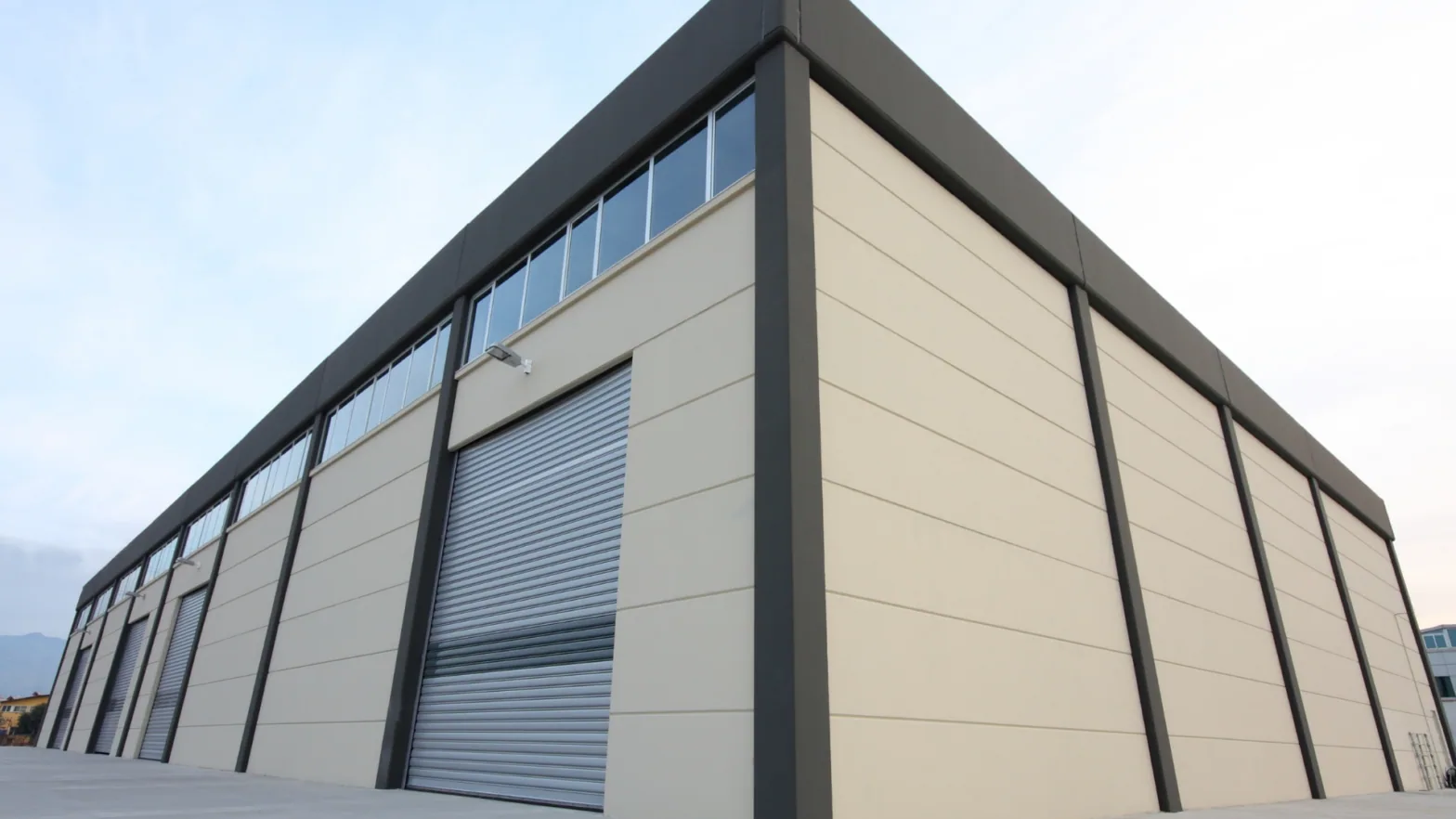
Some tasks are easier to complete during a break, but a leak should not wait for summer if water is reaching classrooms or electrical spaces. We separate immediate protection from permanent work and explain what can be done during occupied hours. The school identifies student routes, bus movements, delivery windows, outdoor activities, and any area that must remain clear. Contractors plan lifts and material staging so a roof route does not cross a student path.
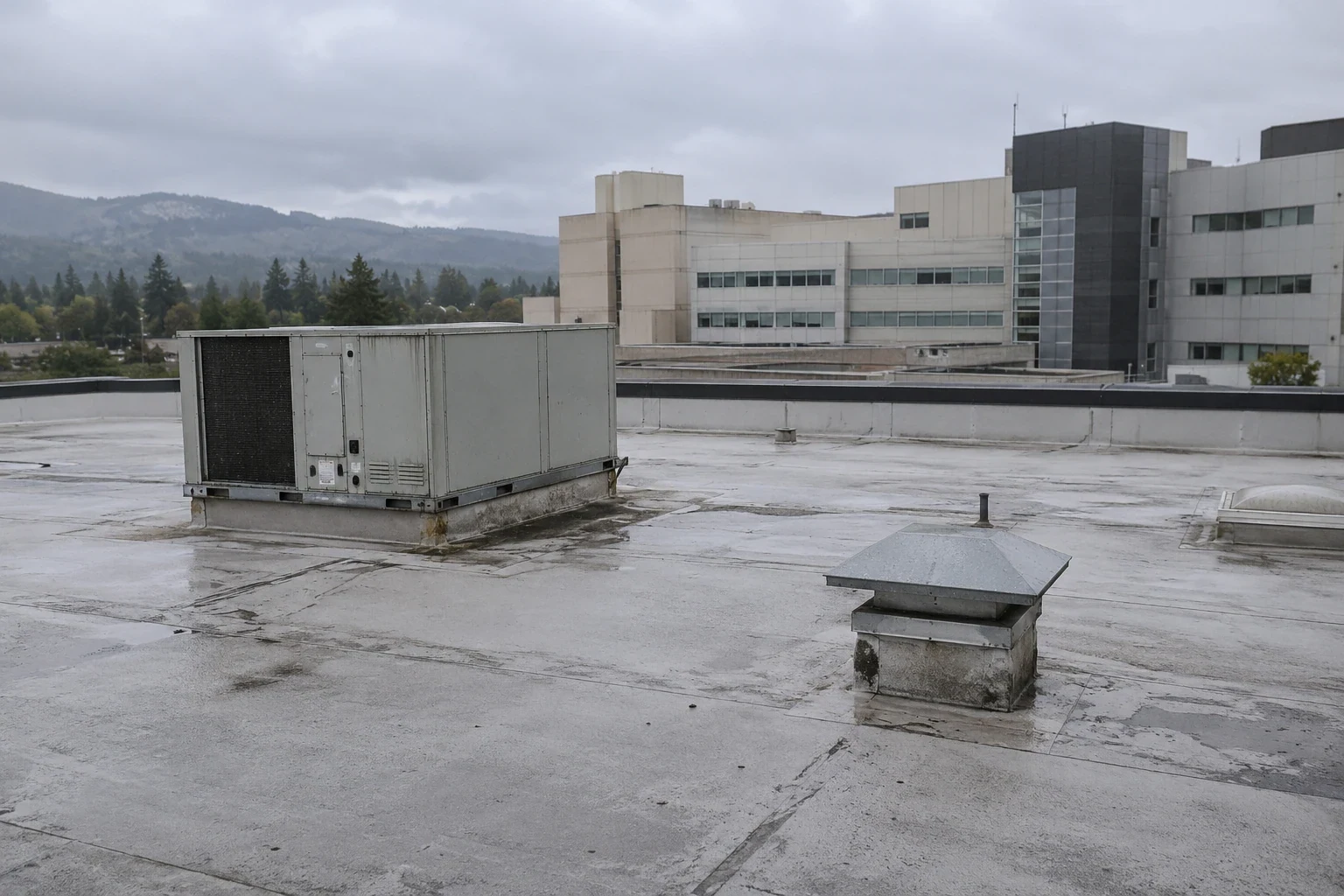
Campus buildings may have been added at different times. A newer wing can meet an older roof at a transition that needs its own inspection. Rooftop units, exhausts, skylights, and conduit introduce details that can be disturbed by later trades. We map those connections and ask who services each item. For a larger public campus, a government building roof review can also address procurement and phased-access needs.
Where do school roof leaks usually travel?
A classroom ceiling mark may be several feet from the roof opening. Water can track along a deck flute, insulation joint, pipe, or wall before it shows inside. The school can help by recording the room, date, weather, and any ceiling or mechanical work. We compare that information with seams, drains, penetrations, and transitions above. If the evidence points to a plumbing or condensation issue, we explain what should be checked by the appropriate trade.
Drainage problems may show up as recurring leaks after rain. We check drain bowls, scuppers, overflow paths, and nearby seams for debris or stress. A blocked outlet and a failed drain flashing need different actions. A drainage inspection records the entry point so the district can choose maintenance, repair, or a broader correction. We also look for loose material that wind could move across a membrane or into an outlet.
Portland International Airport normals show Gresham's wetter months run from fall into spring. School staff should report new interior water promptly during that season, while the contractor protects any open roof detail before the permanent scope is ready. The campus inspection determines the actual condition.
What should a school roof report include?
A useful report identifies the building or roof zone, condition, photos, and recommended response. We review seams, flashings, roof edges, drains, penetrations, parapets, and visible transitions. Findings are divided into active leak entry, routine maintenance, and longer-term capital needs. That makes it easier for facilities staff to communicate priorities to administrators and set a next action for each item.
Interior clues matter too. Ceiling stains, recurring moisture, damaged tiles, and the timing of a leak help guide the roof walk. If the membrane hides wet insulation, a moisture survey or test opening may be needed to establish how far the condition extends. We describe the evidence and its limits instead of assuming every wet ceiling has the same cause. The photo-based condition report can support maintenance records and budget planning.
Before access, we confirm the campus contact, check-in point, permitted work hours, and restrictions on photography or staging. The district identifies which spaces are occupied and whether any event changes the planned route. Those details belong in the work plan before a crew arrives.
Should the district repair or replace the roof?
A focused repair may work when the failure is isolated and surrounding insulation is dry. Repeated seam failures, widespread moisture, loose attachment, or deteriorated membrane can justify comparing a larger repair with replacement. We map the affected area and state which details are included. If the assembly is suitable, a recover may be possible, subject to condition and applicable requirements. A coating is an option only for compatible, sound surfaces, not a way to hide wet materials.
Replacement can be planned by building or roof zone. The proposal should describe removal or overlay, edge transitions, drainage, equipment details, protection, and how each area will be closed at the end of a work period. Schools often have fixed calendar windows, but the project should retain a safe daily close in case weather or hidden conditions change the sequence. A replacement plan identifies those decision points before mobilization.
If the district operates several facilities, an education-campus roof review can provide a comparison for larger, multi-building access and capital coordination. The right remedy still comes from each roof's condition, not from the school name or age alone.
How do we keep students away from work areas?
Before work begins, the school and roofer confirm where the crew will enter, where material will be staged, and which paths students use. The plan identifies lift operation, debris handling, noise, and times when a section of the building or playground must be kept clear. School staff manage student movement. Roofing crews maintain the marked work zone and do not move equipment through unapproved routes.
The crew opens only an area it can make watertight before leaving. If concealed damage changes the scope, it protects the boundary and contacts the district for direction before expanding the repair. At shift end, material and debris are secured, drains remain open, and temporary barriers are checked. A daily update tells facilities staff which zone is complete and what remains.
For work near a gym, cafeteria, or other heavily used space, we coordinate the noisiest tasks around the school's approved schedule when practical. Weather, safe roof conditions, and material requirements also affect the sequence. The project contact receives updates when any of those conditions change the planned work area.
What should campus maintenance watch between projects?
Routine checks should include drains, scuppers, seams, wall flashings, roof edges, and locations where HVAC or electrical work has changed the roof. Clear debris before it builds at outlets. Photograph a new puncture or loose edge and report it promptly, especially if water appears indoors. Maintenance staff should avoid making an unapproved patch that could complicate a later repair; a temporary protective measure can be coordinated with the roofing contractor.
Keep roof plans and reports organized by building, since a campus can have several roof assemblies. Record repairs, equipment changes, leak rooms, and dates. A preventive roof visit can check conditions before seasonal rainfall returns and give the district a list of items to budget or repair. A clear record can also help compare recurring issues across buildings without assuming one assembly matches another.
What should a district share before scheduling?
Share roof plans, past reports, affected rooms, campus access rules, the school calendar, and any scheduled rooftop work. Identify the person who can approve repairs and the staff member who coordinates student safety. We will document what the inspection confirms and outline the next step, whether that is temporary protection, a focused repair, or a capital scope. Schedule a roof walk so work can be planned around the people using the campus.
School Roofing FAQs
-
Can roof repairs happen while school is in session?
Often, if the work zone, crew route, lift activity, and hours are approved in advance. The school controls student movement and the contractor keeps to the marked access plan.
-
Should a school wait for summer to repair a leak?
No. Active water entry should be protected promptly. Permanent work can be scheduled around the calendar when the roof condition allows, but temporary protection should not be delayed.
-
How do you inspect a campus with multiple buildings?
We identify each roof zone and its assembly, record conditions separately, and connect interior leak reports to the relevant building. That avoids treating different roofs as one system.
-
Can a roof be replaced during a school break?
A break can provide a useful work window. The plan still needs daily closure, safe access, material lead time, and a response if concealed damage or weather changes the sequence.
-
What should maintenance staff do after spotting a ceiling stain?
Record the room, time, weather, and any nearby work, protect the interior, and request an inspection. The visible stain alone does not establish the roof entry point.
Related Roofing Work

Downtown and Civic Neighborhood
Learn More
Rockwood
Learn More
Commercial Roof Inspection
Learn More
Government Building Roofing
Learn More
Commercial Roof Drains and Scuppers
Learn More
Commercial Roof Condition Reports
Learn MoreSchedule a school roof walk
Request a roof assessment in Gresham
We will coordinate campus access, inspect the roof and drainage, and give your facilities team a clear repair or replacement recommendation. Tell us about the building, the roof and what you are seeing. Call 555-555-5555, email [email protected] or send the details through our contact page and we will set up a time to walk the roof.