
Manufacturing Plant Roofing in Gresham, OR
Coordinate a plant roof review
- Home
- Property Types We Roof
- Manufacturing Plant Roofing
A production line cannot stop because a crew needs access to a roof curb. Manufacturing-plant roofing has to coordinate equipment, exhaust, utilities, safety procedures, and the sequence of work below the roof. We inspect the roof assembly and map the units, penetrations, drains, service paths, and interior areas that may be affected. Gresham's industrial lands include food and beverage processing, electronics, semiconductors, machinery, building components, and other manufacturing. Those sectors may have different operating controls; the facility's own requirements guide the work. The wettest stretch in the Gresham work calendar runs from autumn through spring, so exposed sections need a defined dry-in. A roof inspection records the condition before repairs or replacement are scheduled around production.
Which plant systems should roofing crews coordinate?
The facility identifies exhaust stacks, HVAC units, process vents, intake locations, piping, cable trays, and equipment that must remain active. We map roof access to the maintenance route and ask whether any system needs lockout, escort, or a shutdown window. A new penetration or curb should be coordinated with the equipment contractor before the roof is closed. That keeps the mechanical layout and waterproofing detail aligned.
Production areas may need protection from debris, odor, vibration, dust, or water. We locate sensitive operations below the planned work zone and stage tear-off in sections. The plant contact shares clean-room, food-safety, or process restrictions that affect access and material handling. We follow the site's controls and make the work area visible to the people responsible for the operation.
Manufacturing buildings can have a range of decks and roof systems. We verify the construction from records, exposed edges, or test openings rather than infer it from the process. A curb and support review documents rooftop equipment interfaces. A penetration inspection can check vents, skylights, and conduit transitions before a reroof scope is finalized.
How do plant leaks interrupt production?
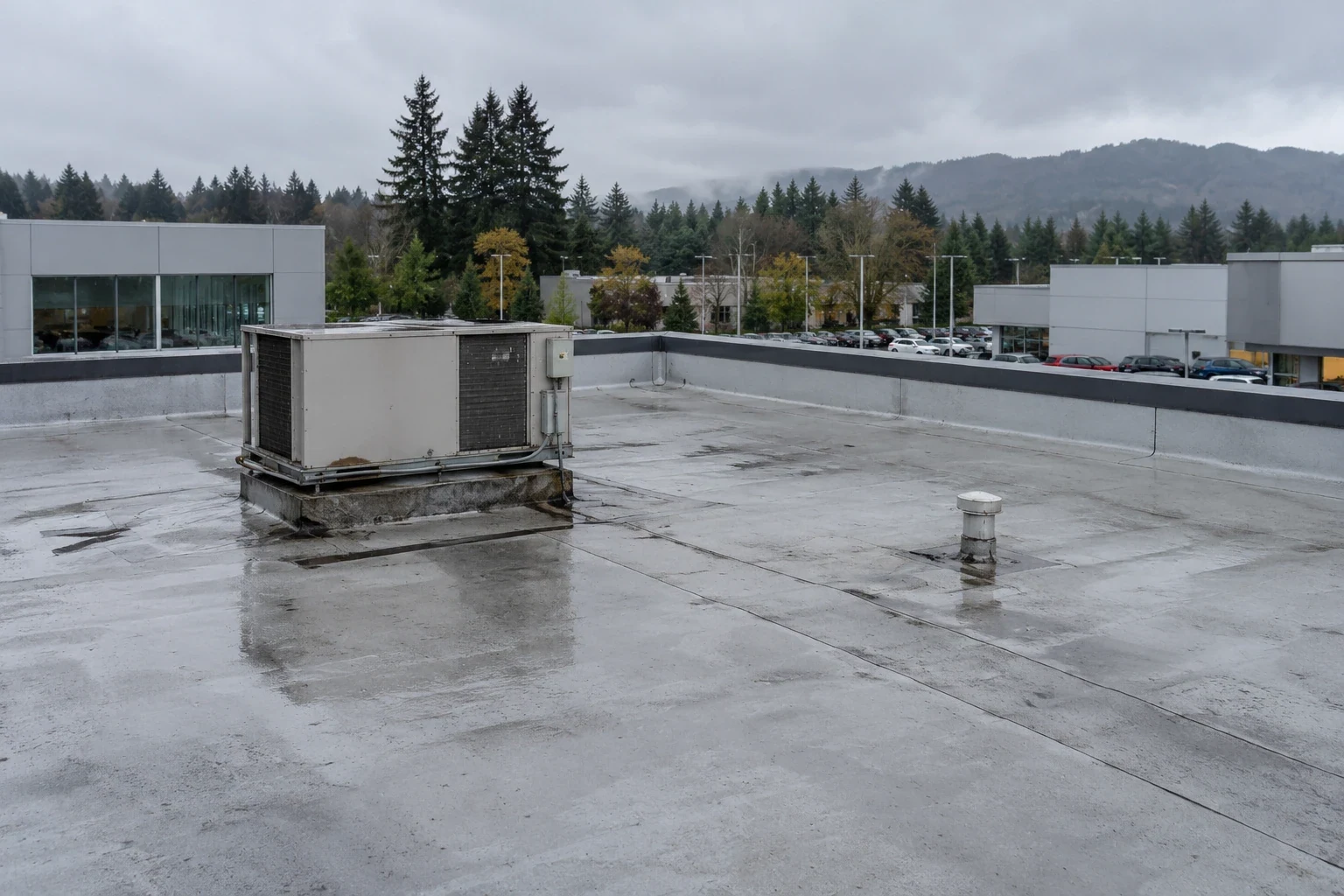
A leak near a process line can reach controls, materials, or equipment before it becomes visible in a general work area. We trace the likely water route through seams, drains, curbs, and roof penetrations, then coordinate interior access with plant staff. The water entry can sit away from a drip mark. When moisture may have traveled into insulation, a moisture survey or targeted opening helps set the repair boundary.
Exhaust discharge and chemical exposure can affect membrane selection. We identify what reaches the roof and where residue collects, then compare those conditions with the specific product's published limitations. The plant's process engineer or equipment contractor may need to confirm the source. We do not assume that a material called industrial roofing resists every chemical. Product compatibility and substrate condition determine the system.
Maintenance traffic can abrade membrane near mechanical equipment, while vibration can stress flashing at a curb. We inspect supports, seams, walkway protection, and nearby drains. A loose pipe stand or missing walkway can cause repeated damage after a repair. A maintenance plan can note service routes and track recurring conditions after the roof work is complete.
Should repairs be staged or completed during an outage?
A localized repair may fit a scheduled equipment shutdown or a short access window. The work can be staged near the unit while the plant continues elsewhere, provided the site controls allow it. Replacement requires a broader plan for noise, material handling, roof openings, and daily protection. We compare repair, recover, and removal based on the documented assembly and the operating constraints.
A recover review determines whether existing layers are dry, stable, and suitable to remain. If wet insulation, deck damage, or incompatible materials are present, a replacement scope may be more appropriate. The plan should state how hidden conditions are photographed, who approves additional work, and how process equipment is protected if the scope changes.
For a plant with multiple buildings, warehouse roofing or a distribution-center scope may share some membrane details but not the same operation. We keep each building's roof report and access sequence tied to its own equipment, process, and safety rules.
What Gresham industrial context belongs in the plan?
Gresham's traded-sector targets include electronics, avionics, medical devices, microelectronics, semiconductors, clean technology, agriculture, and specialized machinery. Its industrial planning also identifies food and beverage processing and building-component production. Those facts describe the area's industry mix, not the process at any one property. We ask the facility which production lines, exhaust points, equipment routes, and shutdown windows apply.
Southshore Corporate Park includes manufacturing, processing, high-tech, and support businesses on an I-84 and Columbia River corridor. The Springwater Employment Area prioritizes high-value manufacturing and technology employment. These broad industrial areas make access and delivery planning relevant, while each facility sets its own gate, safety, and production controls.
Regional rain is most common from fall through spring. We plan protection around the selected roofing system, current forecast, and plant schedule. If a roof zone cannot be closed before a weather change, the crew does not start it. Facility staff receive a status for each open area and know who to contact if a process or weather condition changes.
How do crews work over an active plant?
Before mobilization, the site team confirms roof permits, escorts, hazard controls, shutdowns, intake protection, work hours, and the routes used by employees and equipment. We identify lifts, staging, waste paths, and areas below the roof that require protection. The sequence may align a roof section with a production outage or place louder work outside a sensitive shift.
Crews remove or prepare the existing system in controlled zones, inspect exposed deck and insulation, and document concealed conditions. New insulation, cover board, membrane, and flashings are installed to the approved assembly. The supervisor checks penetrations, drains, curbs, and perimeter details before moving to the next area. Each zone receives a dry-in before the shift ends.
At closeout, the facility receives the system notes, photographs, repaired locations, and remaining observations. A closeout report gives maintenance staff a record of what changed. We can schedule the next roof walk around production, occupied hours, and equipment service.
What should the plant manager approve?
Confirm the roof assembly, repair or replacement boundaries, insulation, membrane, chemical exposure, equipment interfaces, drainage, and access plan. Identify who can authorize a shutdown, approve concealed repairs, and pause work for a process or safety concern. The scope should say how air intakes and sensitive areas are protected and how roof openings are closed each day. A defined contact chain prevents operations from relying on word-of-mouth when schedules change.
Manufacturing at Southshore or in Springwater can involve freight deliveries and active equipment routes. We map those constraints with the plant manager and name a staging area before material arrives. The project record notes the work zones and systems that must stay operational. We can walk the roof with facilities and maintenance and schedule around the next outage or safe access window.
Manufacturing Plant Roofing FAQs
-
Can roofing work continue while production runs?
Often, if the plant approves access, work zones, noise, intake protection, and equipment restrictions. Some repairs or lifts require a shutdown. We coordinate the sequence with operations and state the restrictions before work reaches the affected area.
-
How do you handle chemical exhaust above a roof?
We identify the exhaust source, discharge path, and affected roof material, then check product-specific compatibility. The process or mechanical team confirms operating conditions. If exposure exceeds a system's published limits, the design needs another material or protection approach.
-
What happens when the roof deck is damaged under a production area?
We photograph and mark the condition, coordinate safe access below, and follow the approved concealed-condition process. The owner authorizes added deck or insulation work before the assembly is covered. The report identifies the affected zone and any operational impact.
-
Can a roof replacement be scheduled during a planned outage?
Yes. The facility can align roof zones, equipment lifts, and penetrations with an outage window. We verify the weather plan, deck work, material delivery, and daily closeout so the roof remains protected if the schedule shifts.
Related Roofing Work
Commercial Roof Inspection
Learn More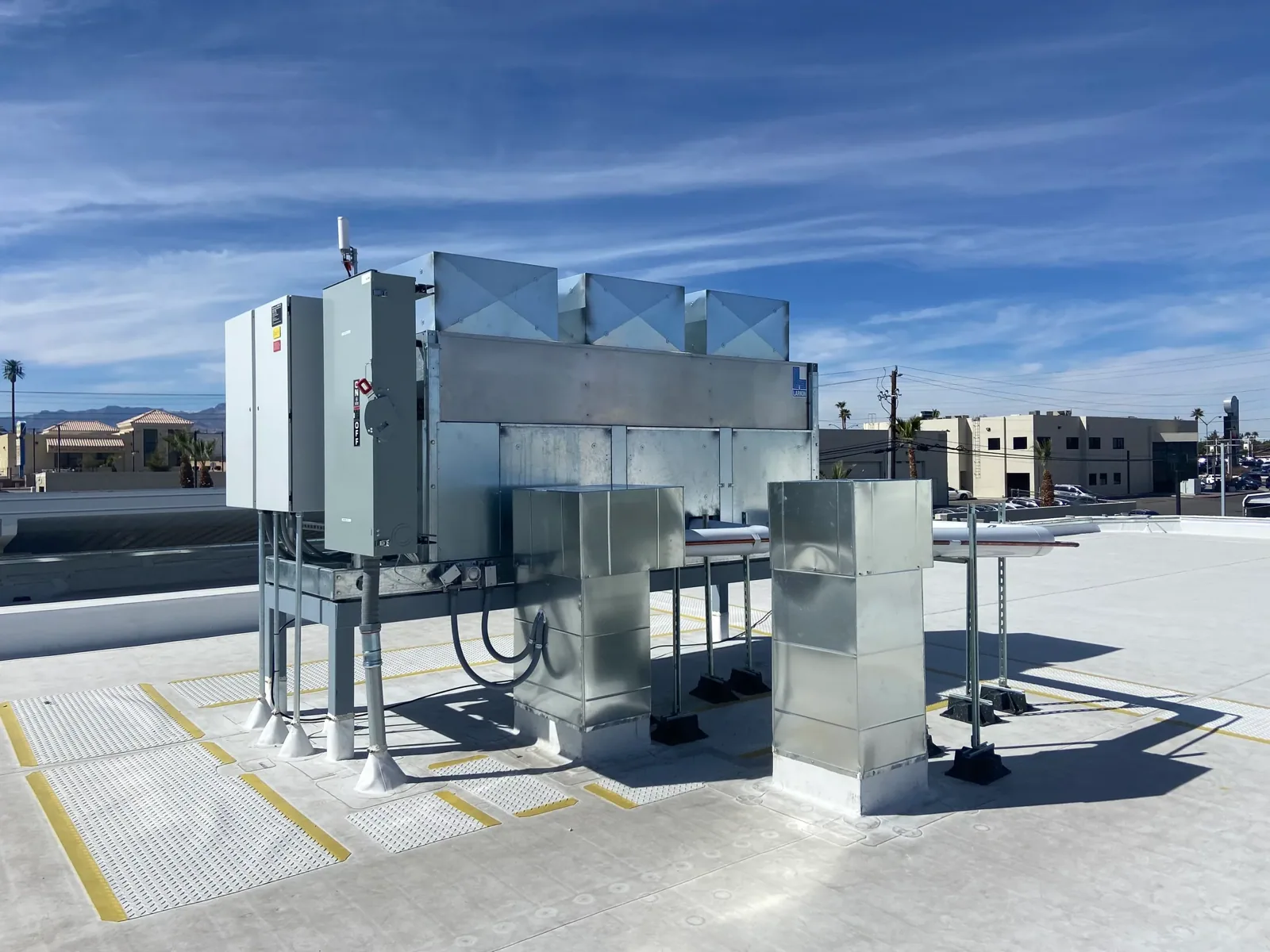
Rooftop Equipment Curbs and Supports
Learn More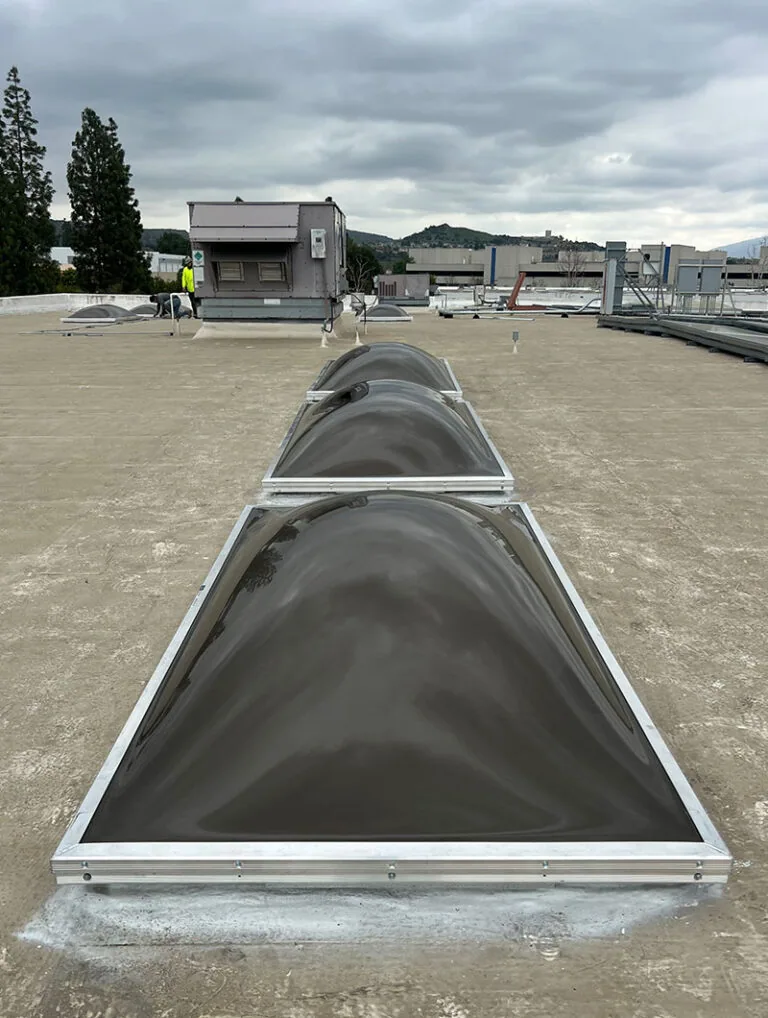
Commercial Skylight and Penetration Flashing
Learn More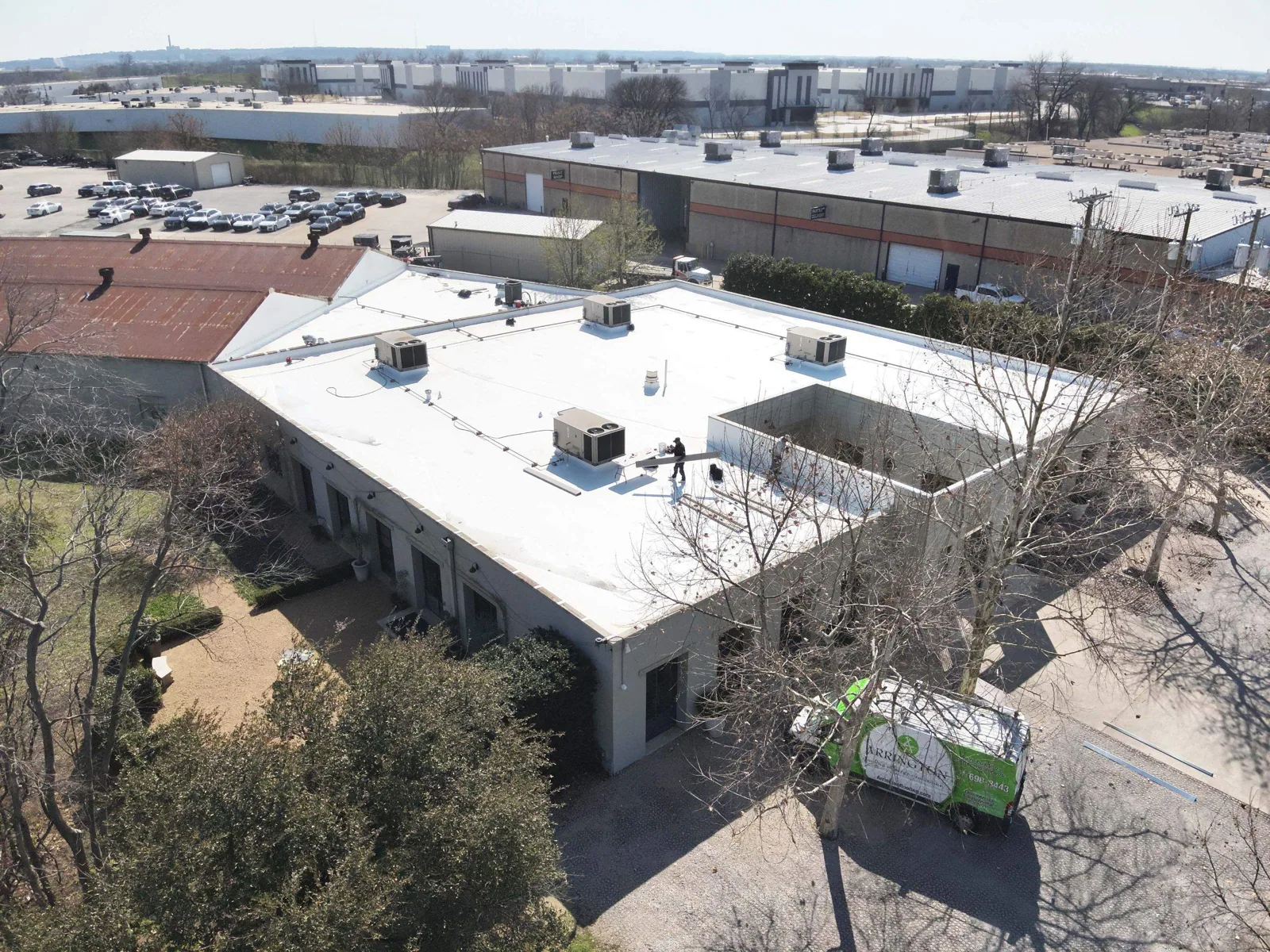
Commercial Roof Recover
Learn More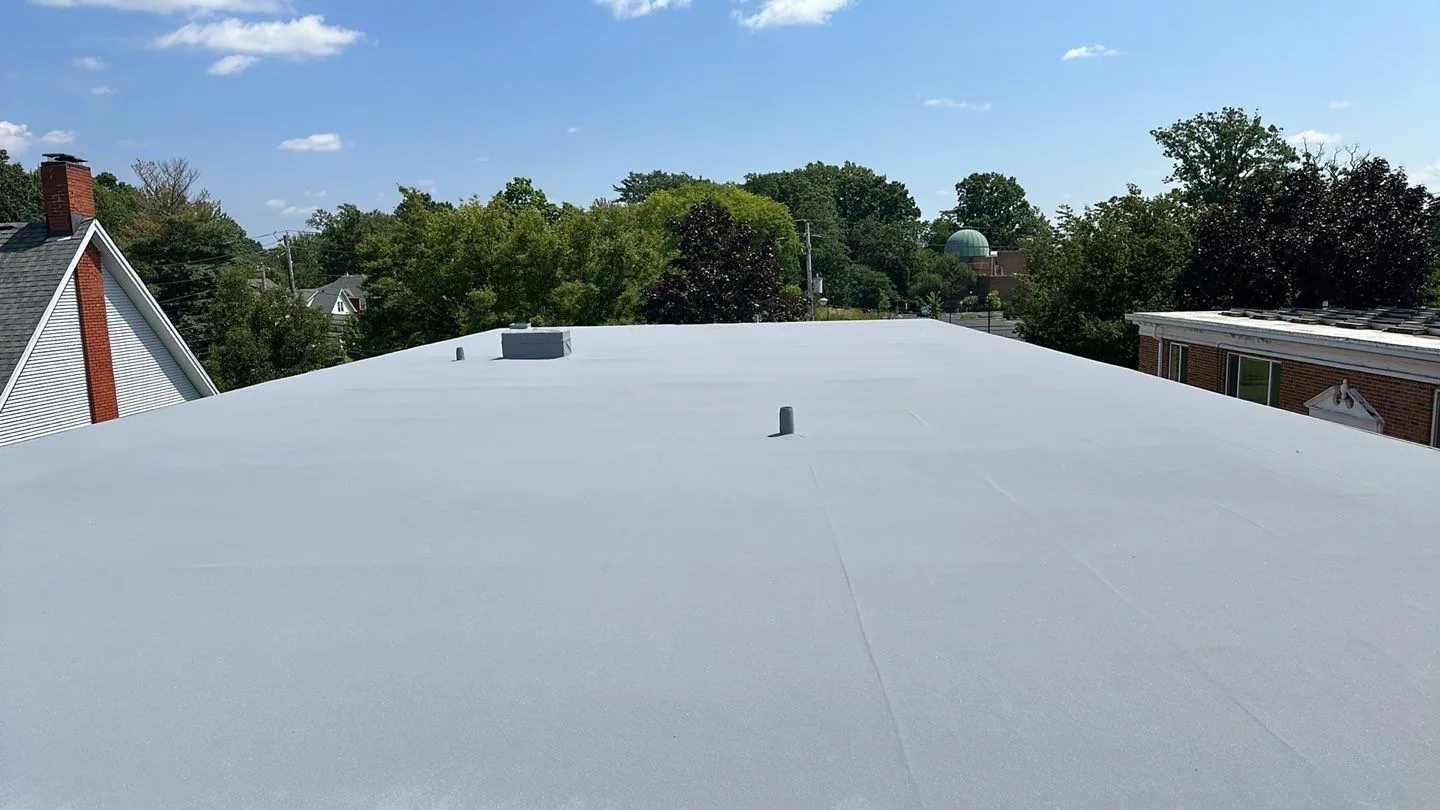
Commercial Roof Replacement
Learn More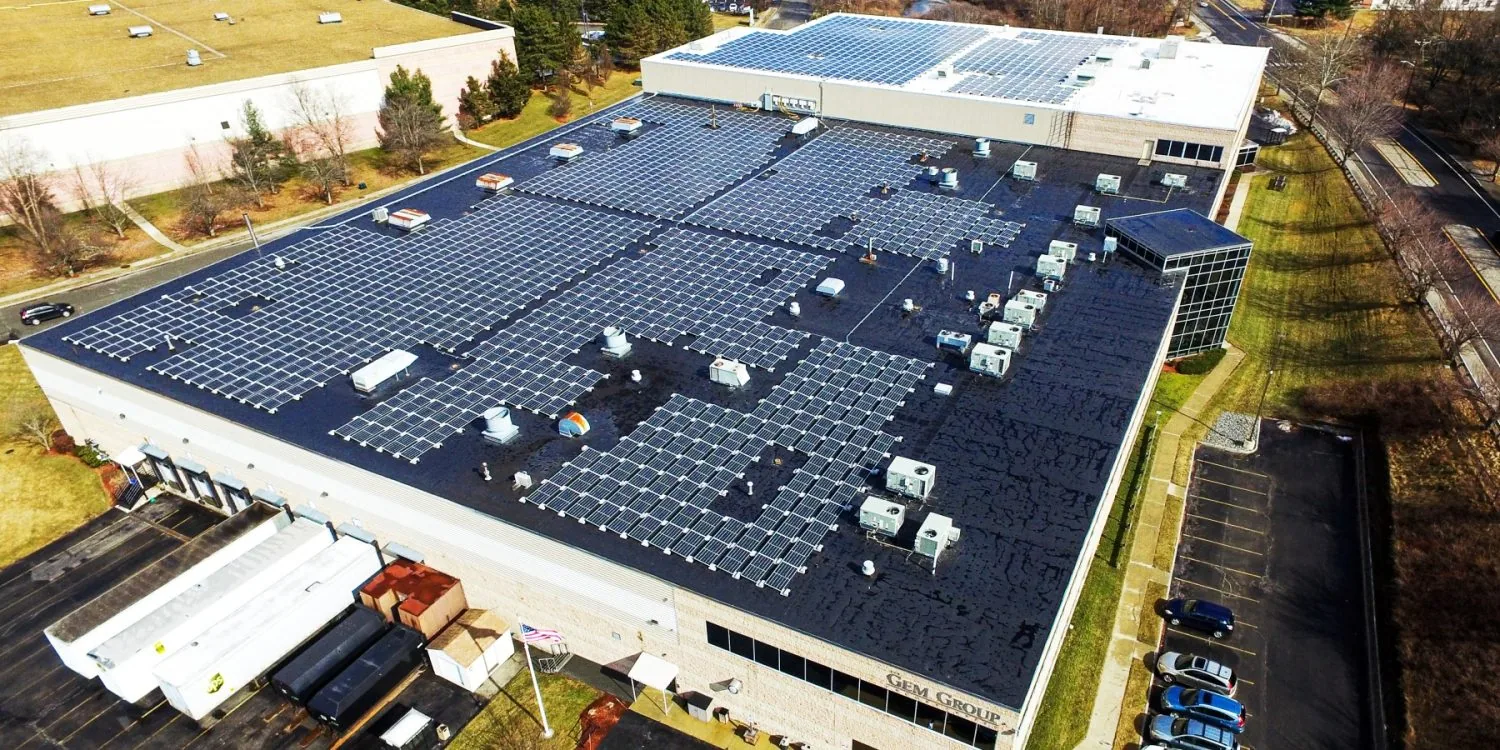
Warehouse Roofing
Learn MoreCoordinate a plant roof review
Request a roof assessment in Gresham
We will document equipment and roof conditions, map the work zones, and coordinate a sequence with your Gresham operations team. Tell us about the building, the roof and what you are seeing. Call 555-555-5555, email [email protected] or send the details through our contact page and we will set up a time to walk the roof.