
Commercial Roofing for Manufacturers in Gresham, OR
Plan a manufacturing roof review
- Home
- Industries We Serve
- Manufacturers
Manufacturing roof work must fit equipment, shifts, receiving, and the areas where production takes place. A small opening can affect inventory or a process line, while a repair near an exhaust or rooftop unit may need another contractor. We begin with the roof assembly, plant contact, and the operating window available. Gresham’s industrial lands include food processing, semiconductors, aircraft components, building products, and other manufacturing. Southshore Corporate Park and Gresham Vista Business Park are broad industrial employment areas. A roof inspection documents the assembly and details before a plant schedules repair work.
How do production needs shape a roof project?
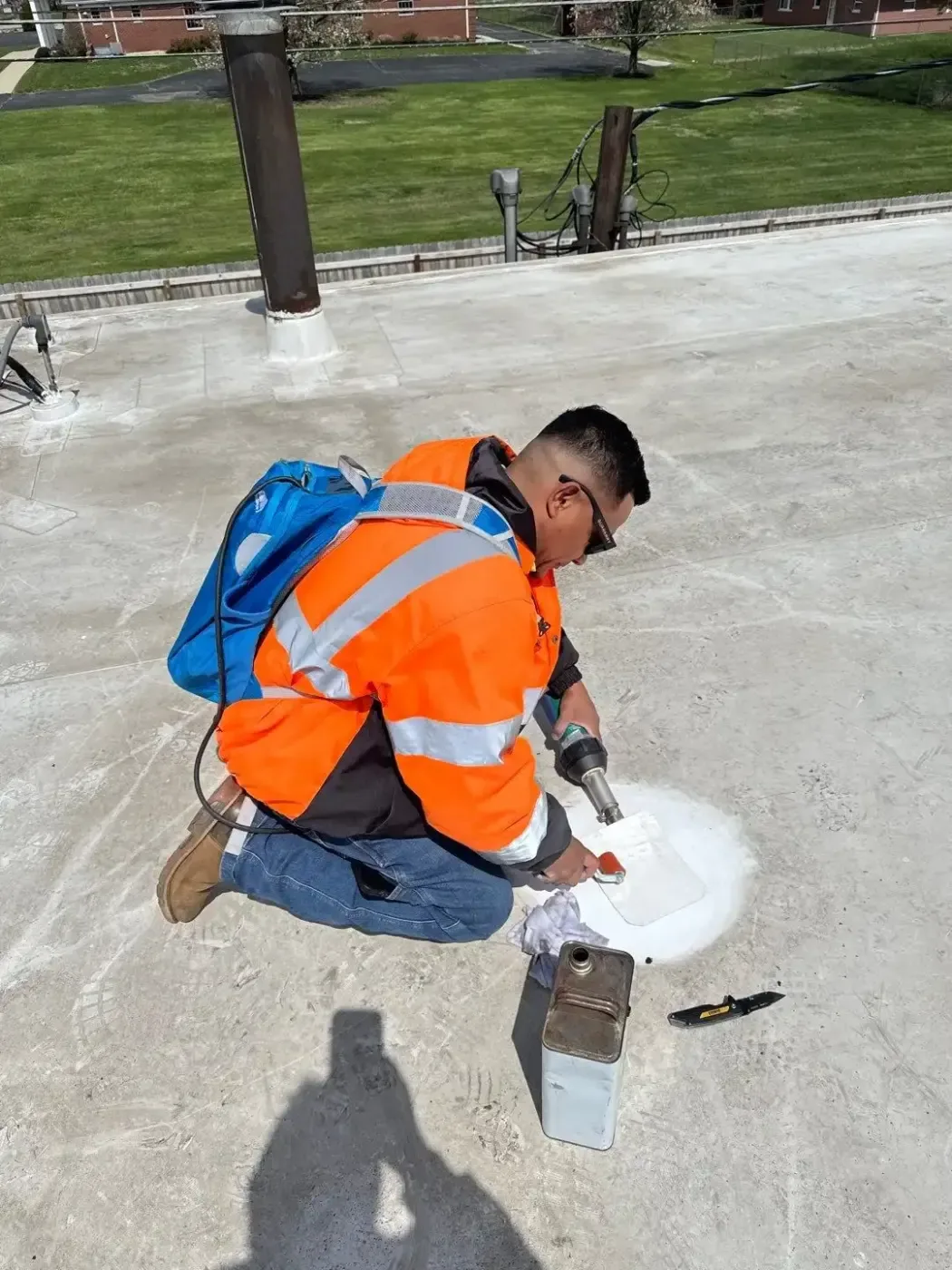
The plant contact identifies process areas, shift changes, loading routes, crane or lift restrictions, and equipment that cannot be interrupted. We confirm whether roof access crosses a controlled zone and who can escort the crew. Work near exhaust, intake, or process equipment needs coordination with the operator so the roofing sequence does not conflict with the plant’s own controls.
Production buildings can include offices, warehouses, service bays, and additions with different roof systems. We map each roof zone and mark the transitions where assemblies meet. Equipment curbs, supports, exhausts, and abandoned lines are checked individually. A logistics roof program addresses dock flow and goods movement, while manufacturer planning adds process equipment and shift coordination.
What can cause a plant leak to interrupt production?
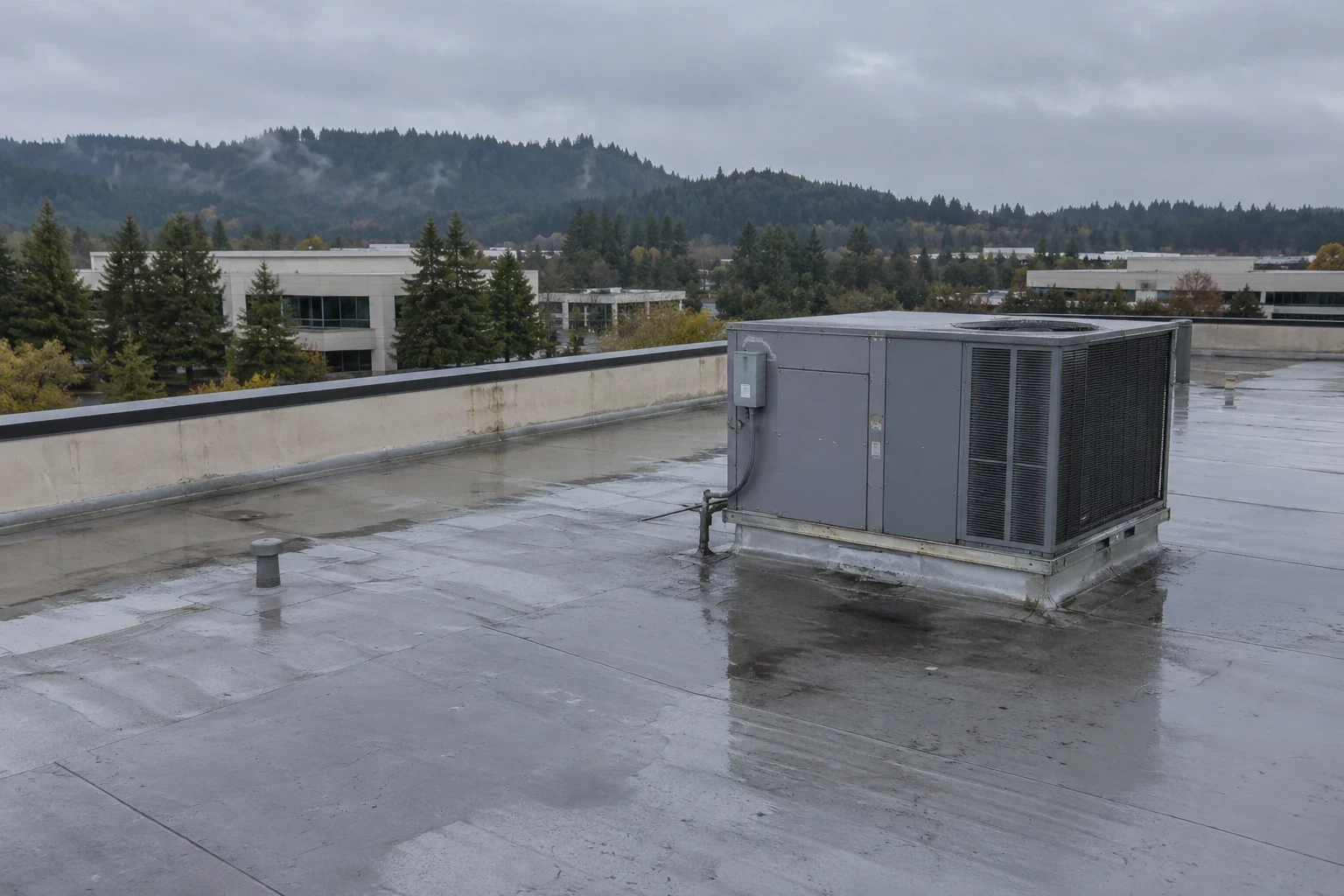
Water may enter at a seam, penetration, wall, or drain and move through the assembly before appearing inside. A ceiling mark near a machine can sit away from the roof opening. We compare its location, timing, and recent equipment work with visible roof conditions. If readings indicate damp insulation beneath intact membrane, a targeted core or test opening may be needed to map the repair limit.
Roof work by an equipment vendor can leave a loose support, damaged membrane, or unsealed abandoned line. A plant should record the vendor, work date, and roof zone for each installation. We inspect the curb and flashing and clarify what the roofer can repair versus what the equipment trade must finish. A curb and support inspection captures that handoff.
Drainage should be checked around process exhausts and service paths where debris can collect. An obstructed outlet and a failed flange require different work. The drainage assessment records the outlet, overflow route, and surrounding membrane.
What should a manufacturing roof report capture?
We document assembly, seams, penetrations, drains, edges, wall transitions, equipment bases, and visible prior repairs. Photos identify the roof zone so plant and facilities staff can relate the finding to a production or storage area. Findings separate active water entry from scheduled maintenance and capital needs. The report also identifies access limits and any follow-up testing required.
Plant records can include leak work orders, equipment changes, production schedules, and prior roof scopes. These details help locate a likely entry point and plan a visit. If a survey or test cut is recommended, we state the reason and boundary so management can approve the next step. The facilities contact determines whether the proposed access is compatible with plant operations.
For manufacturing sites in Southshore Corporate Park, material arrival and crew entry follow property-specific procedures. A large industrial area does not imply a shared gate or work window across separate operators.
When is localized repair no longer enough?
A repair may solve one puncture or failed flashing if nearby insulation, attachment, and seams remain sound. Repeat leaks across several zones, widespread wet material, or failing attachment can justify a replacement evaluation. Recover or coating options depend on the roof’s system, moisture, drainage, edges, and substrate. The inspection should explain the condition that supports the chosen method.
Plant replacement scopes need to identify work area, equipment tie-ins, removal or overlay, access, staging, production impacts, and daily closure. A replacement sequence can be divided by line, bay, or building where the assembly allows. A contractor should identify the critical path and what the plant needs to provide before the work window begins.
For multi-building ownership, a property manager roof program can organize tenant access and records across the portfolio. The manufacturer retains control of process scheduling and equipment decisions at its plant.
How can roof work fit a production window?
Before mobilization, we confirm who approves site access, the crew route, work area, staging, lift placement, shift schedule, and any planned equipment shutdown. The plant identifies what can remain active and how to separate the work zone. The roofing crew uses the approved path and does not operate production equipment.
We open only a section that can be protected and closed before leaving. If removal exposes an unexpected condition, we protect the opening, record the assembly, and ask the site contact to approve a revised boundary. At close, the plant contact receives the completed area, drainage status, and any remaining restriction. If a work window changes, the facility contact sets the new time.
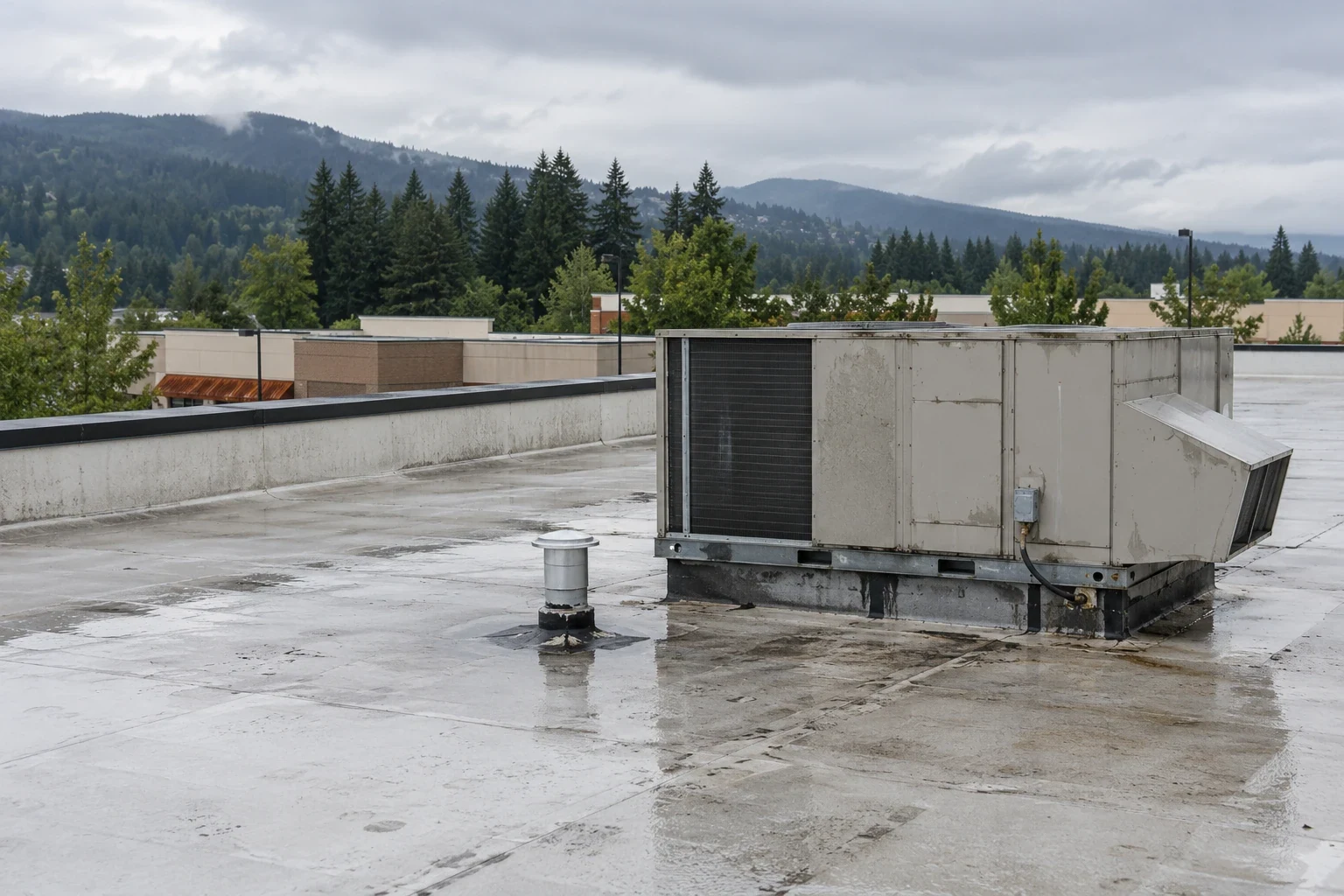
Several trades may need the same curb or roof route. The schedule names who moves equipment, who completes flashing, and who inspects the finished transition. That sequence can prevent a production line from waiting on an unclear roof handoff.
What should a plant roof program include?
Keep roof plans, system information, inspection photos, leak work orders, equipment changes, repair closeouts, and access notes by building. Routine visits review seams, drains, penetrations, edges, and locations touched by mechanical or process contractors. After a new exhaust or support is installed, verify that the flashing is continuous and the opening is closed.
Gresham identifies electronics, food processing, medical and biological businesses, and specialized machinery among its industrial targets. Southshore Corporate Park also supports manufacturing and distribution uses. A preventive maintenance visit can update the plant record and identify repairs to schedule before the region’s wet season. A closeout should note which building areas were completed, any temporary protection left in place, and the follow-up owner. When production staff report another leak, the facilities team can compare its location with the repair history and determine whether it is the same detail or a separate roof zone.
What should a plant manager share?
Provide roof plans, leak locations, prior repairs, equipment work orders, shift and loading schedules, access rules, and any production restrictions. Identify who can approve the repair and who controls each rooftop system. We will inspect approved areas and document the work boundary. Schedule a roof walk so facilities and production staff can agree on a practical work window. An outage plan should identify which production lines, rooftop units, exhaust paths, and interior zones depend on the affected roof area. We confirm the handoff point with facilities before staging materials, then leave a closeout note that separates completed work from any follow-up requiring a shutdown.
Manufacturers FAQs
-
Can roof repairs happen while a plant is operating?
Often, with an approved work zone and a schedule coordinated with production. The plant controls process equipment and access, while the roofer limits the open area and closes it safely.
-
How do you keep equipment vendors and roofers coordinated?
We identify the curb or penetration, responsible trade, and order of work before opening the roof. The plant contact approves any equipment movement or shutdown.
-
What should we do when a leak appears over a production area?
Record the time, area, weather, and recent equipment work, then protect the interior under plant procedures. A roof inspection traces the entry point before a permanent scope is set.
-
Can a large plant roof be replaced in stages?
Phasing may follow a roof zone, bay, or building. The scope should identify production constraints, material routes, equipment tie-ins, temporary protection, and daily closure.
-
How should we track roof work after a machine is installed?
Add the vendor, date, roof zone, new penetration, and flashing closeout to the building file. A follow-up review can confirm that the roof tie-in is complete.
Related Roofing Work
Gresham Vista Business Park
Learn More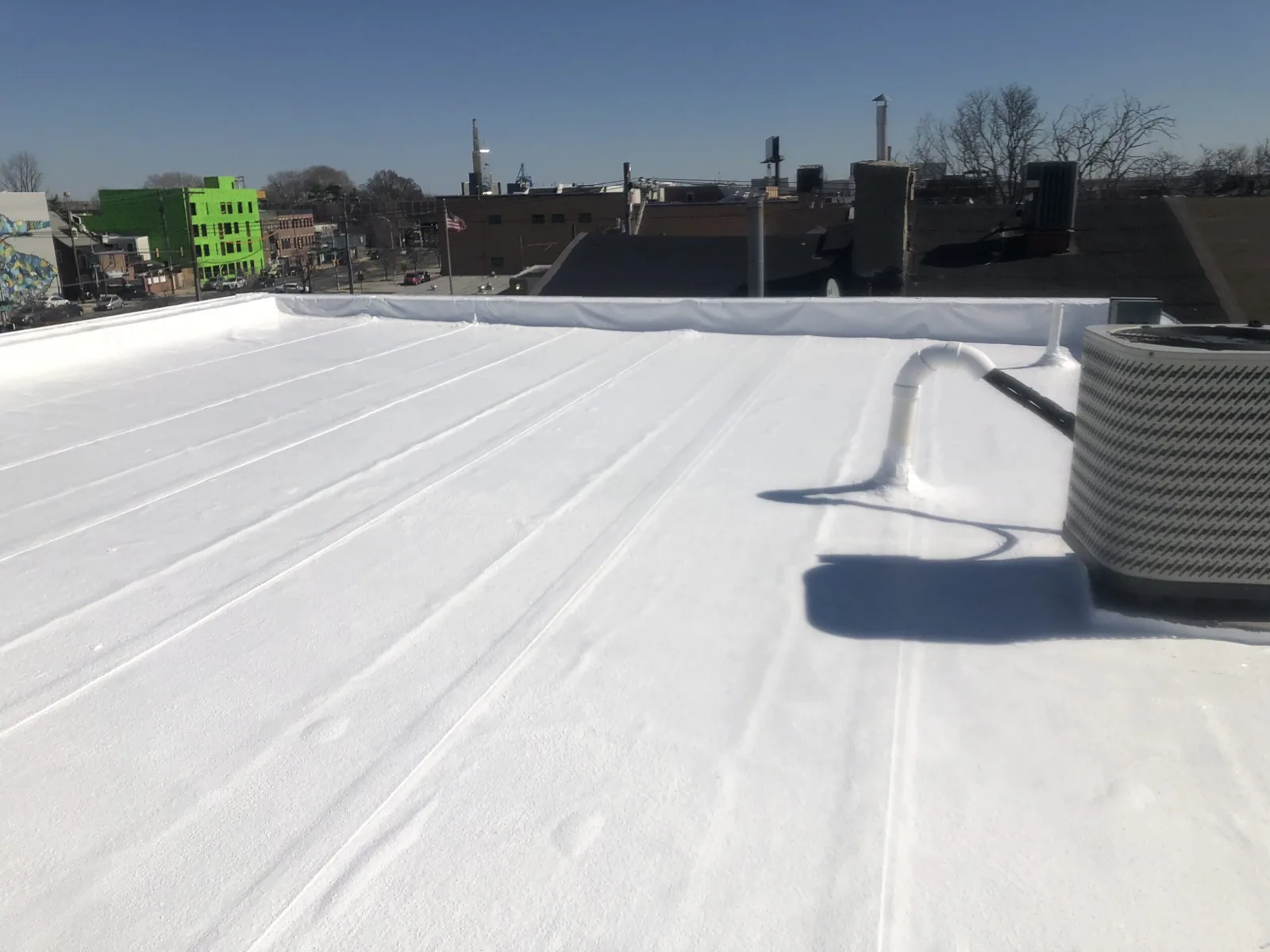
Commercial Roof Inspection
Learn More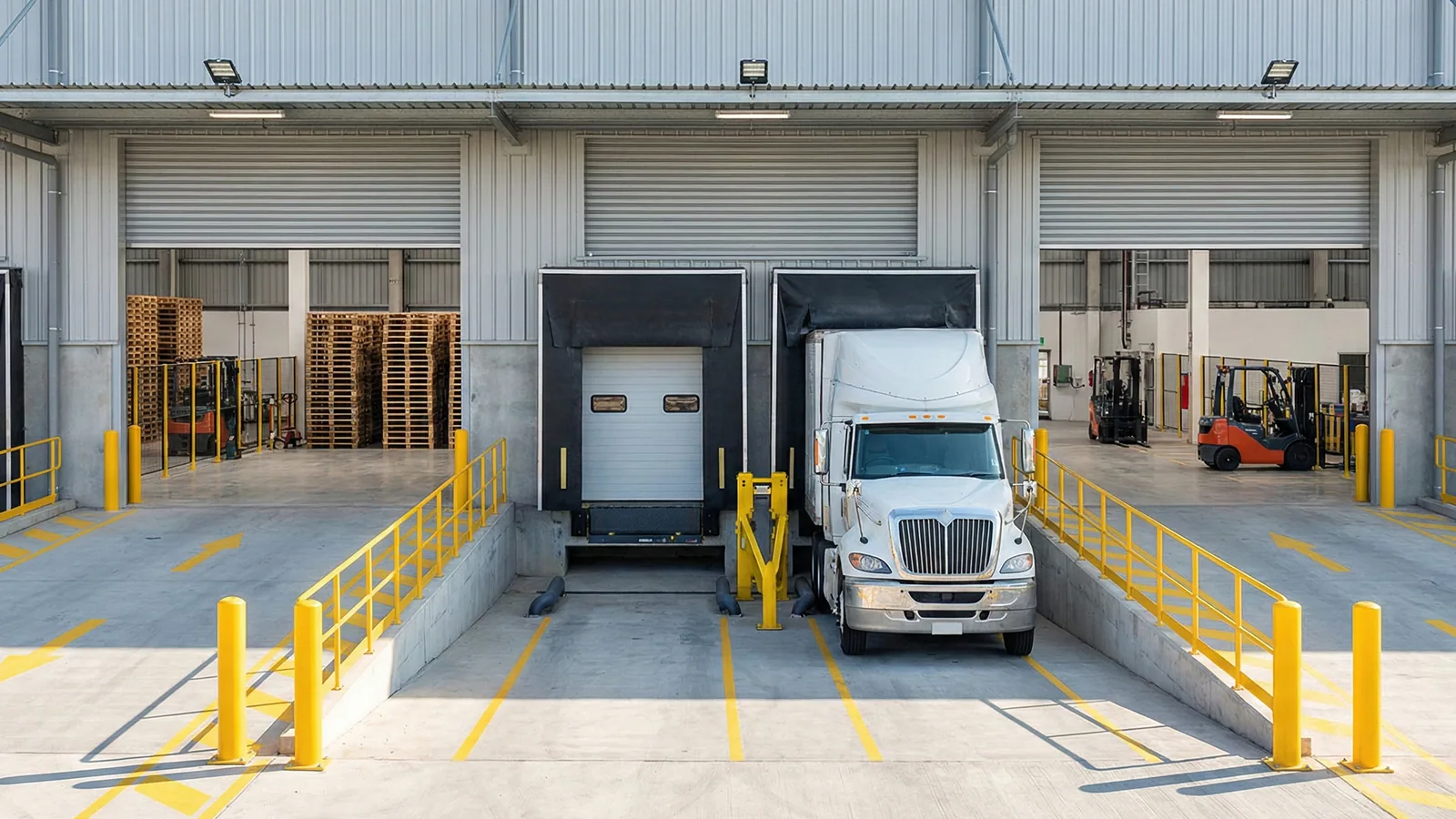
Logistics and 3PL Operators
Learn More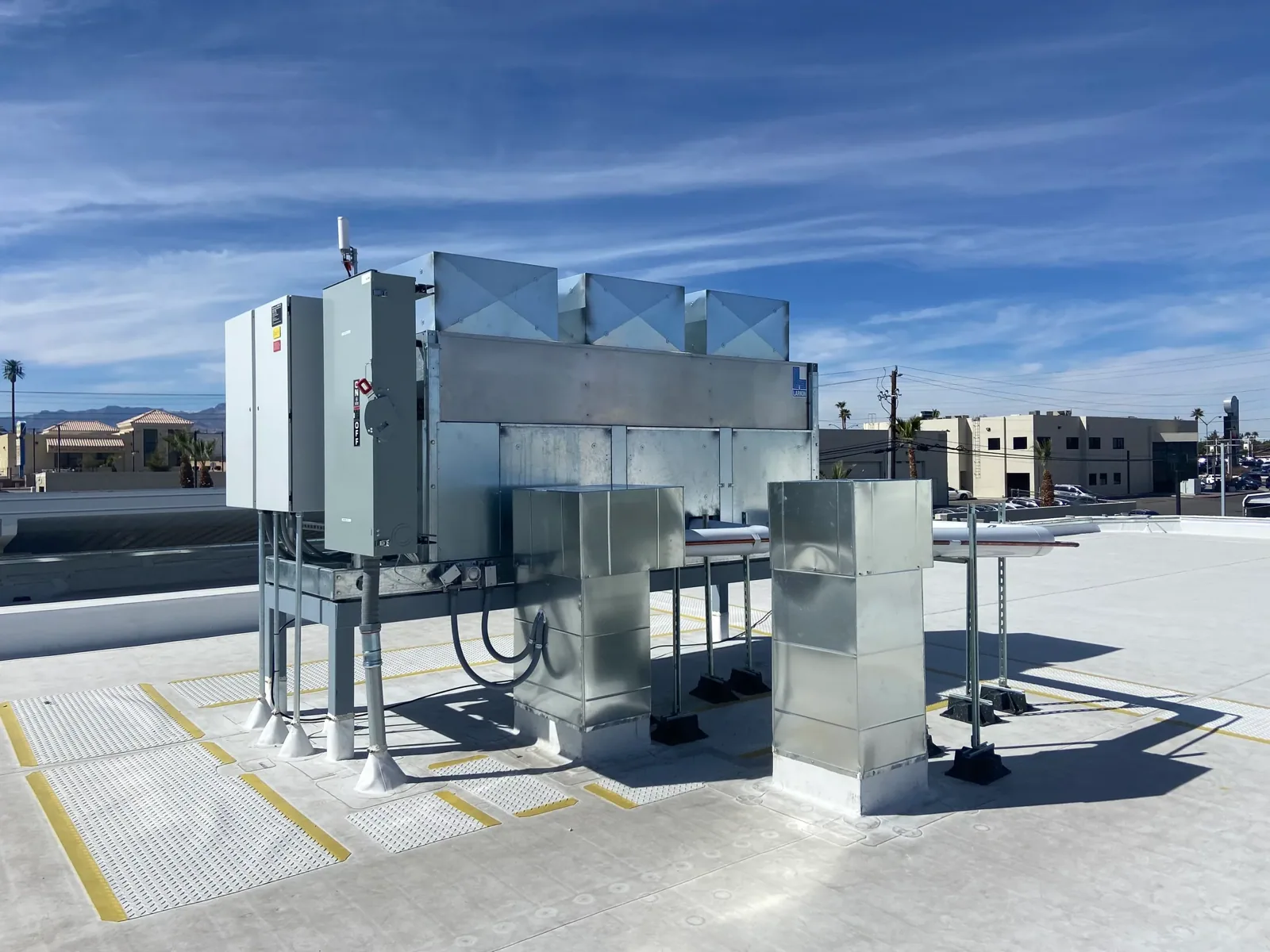
Rooftop Equipment Curbs and Supports
Learn More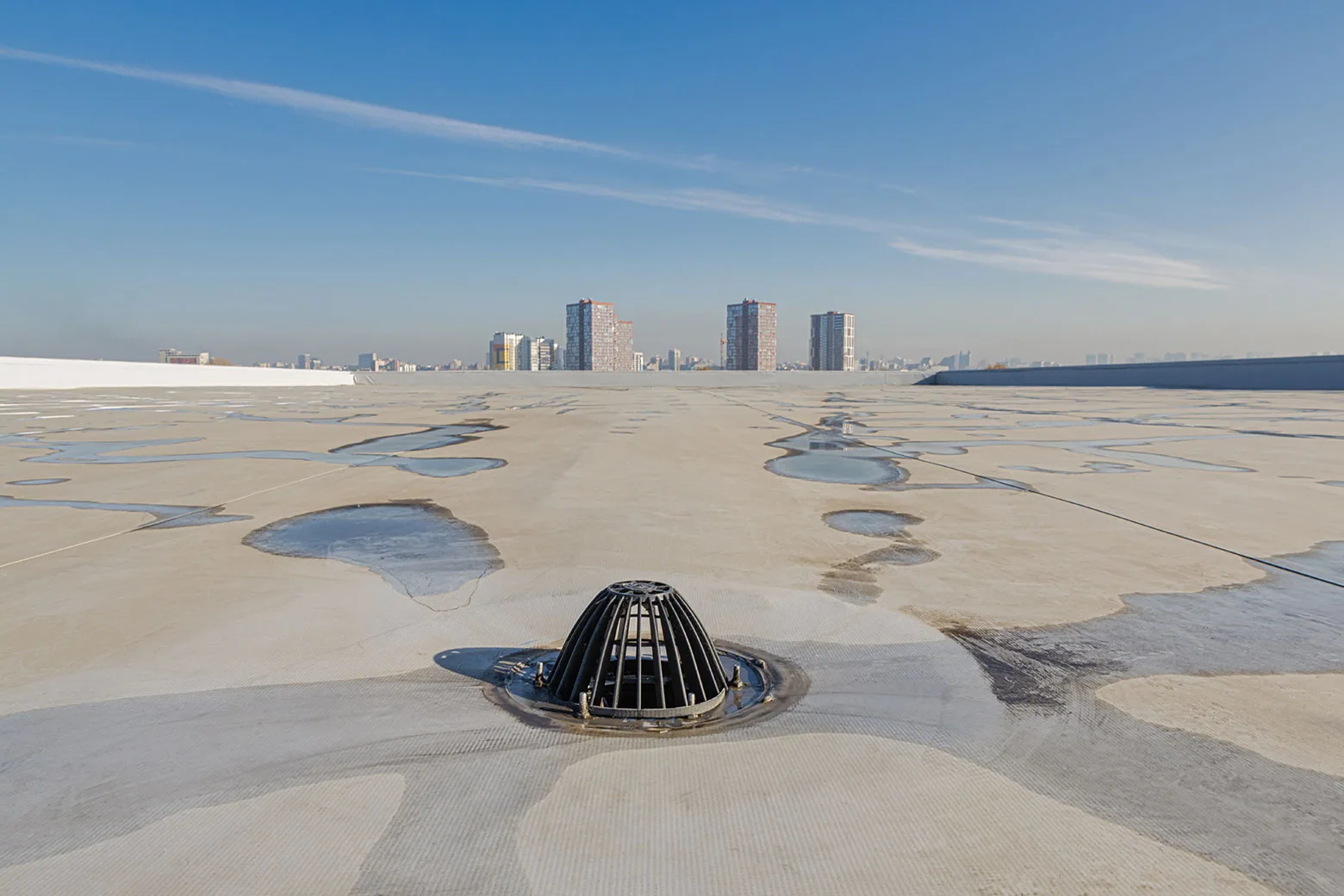
Commercial Roof Drains and Scuppers
Learn More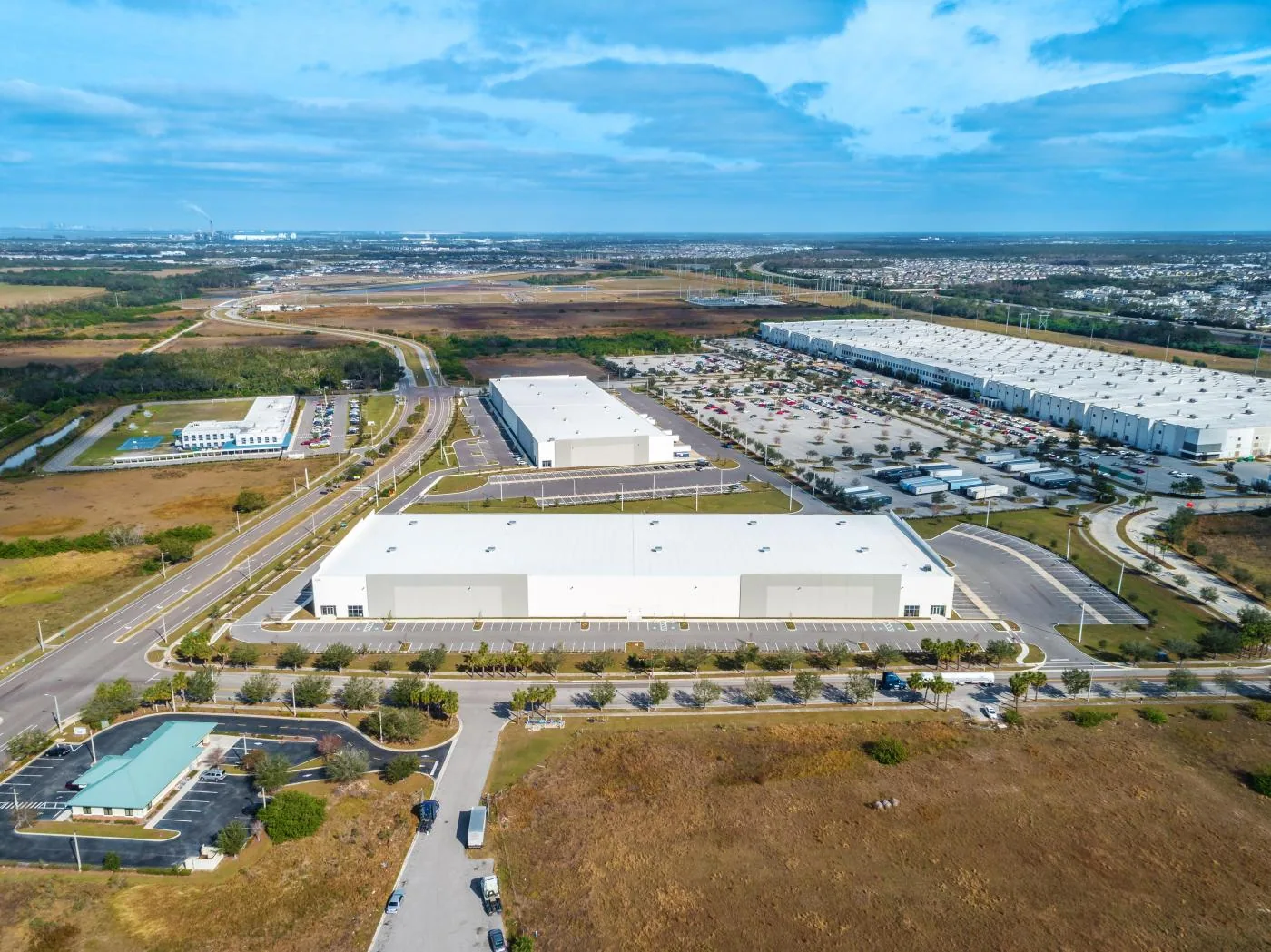
Southshore Corporate Park
Learn MorePlan a manufacturing roof review
Request a roof assessment in Gresham
We will coordinate with plant facilities staff, inspect the roof and equipment details, and recommend a repair or replacement scope around production needs. Tell us about the building, the roof and what you are seeing. Call 555-555-5555, email [email protected] or send the details through our contact page and we will set up a time to walk the roof.